
ABOUT KAREN BOTHA · FOUNDER OF FERTILITY BANDWIDTH™
About Karen Botha: IVF & Fertility Support Without the Noise
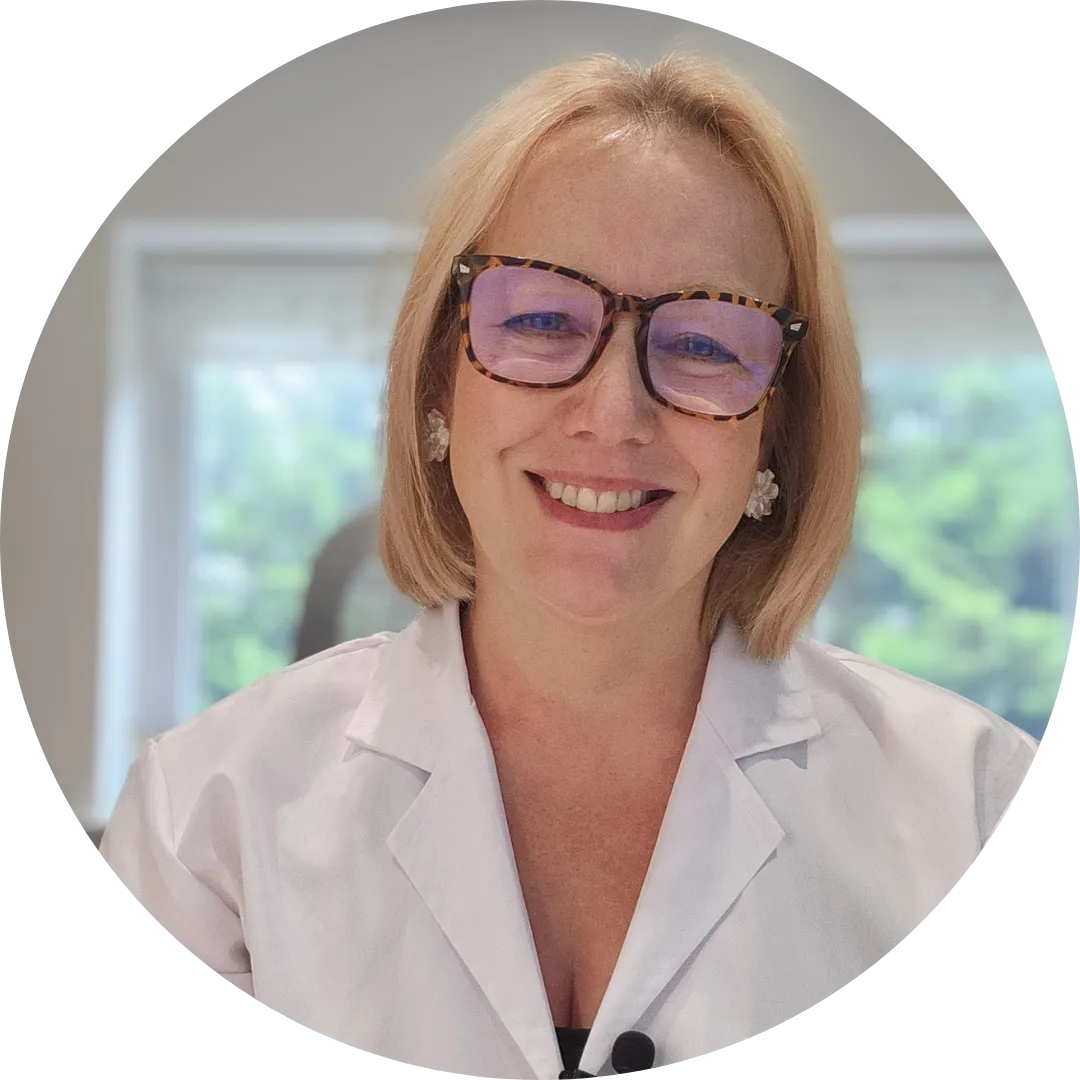
If you're on this page because you're deciding whether you can trust me with something this important, you should be.
Fertility is too important to hand over to somebody simply because they sound confident online.
You may already have:
a fertility clinic,
a diagnosis,
an AMH result,
a supplement drawer,
months or years of tracking,
a previous IVF cycle,
or hundreds of saved posts telling you what you should be doing.
What you may still not have is a clear way to answer:
What actually matters in my situation?
What has already been properly investigated?
What still deserves a question?
What can I influence?
And what am I currently carrying because somebody on the internet told me I should?
That is the gap Fertility Bandwidth™ was created to fill.
Not to replace fertility medicine.
Not to promise control over an outcome nobody can guarantee.
And not to give you another enormous fertility protocol.
To help you understand what deserves your attention — and what doesn't.
You Probably Aren't Short of Fertility Information
Most women who find me have already tried incredibly hard.
You may have tracked ovulation until sex started feeling scheduled.
Changed your diet.
Stopped drinking.
Bought supplements.
Read about egg quality.
Researched inflammation.
Watched your AMH.
Asked whether stress is ruining everything.
Compared IVF protocols.
Analysed embryo grades.
Googled symptoms at midnight.
And still you end up asking:
“But what am I actually supposed to do with all of this?”
That is the problem...
The fertility world does not suffer from a shortage of information.
It suffers from a shortage of context.
Because a study can be real without applying to you.
A biological mechanism can be plausible without proving that a treatment improves pregnancy or live-birth outcomes.
A supplement can be useful for one person and unnecessary for another.
And a fertility test can give you important information without explaining your entire fertility picture.
My work is about helping you make those distinctions.
I Am Not Here to Replace Your Fertility Clinic
This is important!!
Your fertility specialist is responsible for your medical diagnosis, medication, investigations and treatment.
Fertility Bandwidth sits in a different space.
It helps with the questions that often appear around the treatment:
What should I eat for best results?
Do I actually need these supplements?
Should I exercise?
What about sleep?
Does sperm health matter?
What does my previous IVF cycle tell us?
Should I be doing more?
Could I actually be doing too much?
What deserves attention before egg collection?
What changes once I reach embryo transfer?
And how do I get through all of this without making IVF my entire life?
That is the space I work in.
I Understand Why You May Be Sceptical
You should be.
Fertility is full of certainty that has not been earned.
One person tells you IVF is the only thing that matters.
Another tells you IVF will never work unless you “fix the root cause”.
Someone sells you a supplement stack.
Someone else tells you stress is blocking pregnancy.
Then somebody finds one laboratory mechanism and turns it into an explanation for every failed cycle.
I don't work that way.
I deliberately separate:
what we know
from
what the evidence suggests
from
what is biologically possible but not proven
from
what we simply do not know yet.
And then you have a way to plan getting from A to Z without all the diversions in between.
It is considerably more useful when you are making real decisions about your body, money and treatment.
Fertility Bandwidth™ Is Not a Test or a Medical Diagnosis
The name describes the way I organise your wider fertility picture.
Your fertility does not exist in isolation from the rest of your health or your life.
But that does not mean every digestive symptom, poor night's sleep, stressful week or blood-test variation caused infertility.
Instead, I want to understand:
What do we already know?
What has been investigated?
What symptoms or history genuinely change the questions?
What happened during previous treatment?
What belongs with your fertility clinic?
What may reasonably be worth addressing?
And what can safely be left alone?
Fertility Bandwidth™ is a framework for making sense of those questions so you can use the answers sensibly — not a measurement of how fertile you are.
That distinction matters.
My Own Fertility Story Is Why I Care About the Questions That Get Missed
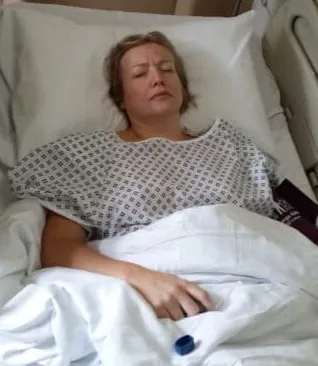
I discovered too late how much I had never properly understood about my own fertility.
Endometriosis and medically induced early menopause brought my own reproductive choices to an end much earlier than I had expected.
There was the obvious grief.
But there was something else underneath it...
I hadn't understood enough while there was still time to ask better questions.
I didn't know what mattered.
I didn't know what didn't.
And I didn't know how to tell the difference between receiving a diagnosis and actually understanding what that diagnosis meant for me.
I will never pretend that different information would necessarily have changed my outcome.
I cannot know that.
But it absolutely would have changed the questions I asked and the decisions I made.
That experience is one of the reasons I will never casually reduce somebody else's fertility to:
“It's your age.”
“It's your AMH.”
“Everything looks normal.”
or
“Just do IVF.”
Those may all contain clinically important information.
They just aren't always the end of the conversation.
Being Over 35 Matters. It Doesn't Make Every Other Question Irrelevant.
Age matters in fertility.
Pretending otherwise does women no favours.
Age can affect the chance of natural conception and IVF outcomes, and it changes how carefully we need to think about time.
But age is still not a complete fertility diagnosis.
The same applies to AMH.
AMH can provide useful information, particularly about ovarian reserve and expected response to ovarian stimulation.
It does not tell you everything about whether conception can occur.
So I will not tell you age doesn't matter.
And I will not encourage somebody with time-sensitive fertility circumstances to spend six months trying to achieve a mythical state of perfect health before starting appropriate treatment.
But neither will I use your birthday to stop asking every other reasonable question.
I Am Not Anti-IVF
I Am Anti-Going Into IVF Feeling Completely Lost...
IVF can be exactly the right treatment.
For some couples, it may offer the most realistic route to having a baby.
My work is not about competing with IVF.
It is about recognising that the medical IVF protocol and everything you worry about around it are not the same thing.
Your clinic manages stimulation.
Monitoring.
Medication.
Egg retrieval.
Fertilisation.
Embryology.
Transfer.
Medical risk.
I want you to understand what deserves your attention around those stages without feeling responsible for controlling every biological variable.
Because IVF preparation should not mean:
eat perfectly,
sleep perfectly,
never feel stressed,
take every supplement,
avoid an ever-growing list of foods,
and then blame yourself if treatment doesn't work.
No amount of preparation can guarantee:
how many eggs will be collected,
how many will be mature,
whether fertilisation occurs,
whether embryos develop normally,
whether implantation happens,
or whether treatment ends with a baby.
But the right prep for your body helps. Plus, preparation also means you go into treatment better informed, less distracted by fertility noise and clearer about which questions actually belong to you.
And IVF Preparation Is Not Only Her Job
The woman may be taking the injections.
Having the scans.
Undergoing egg collection.
Taking progesterone.
Going through transfer.
And carrying the pregnancy.
That does not make fertility biologically hers alone.
Sperm contributes half of the genetic material used to create an embryo.
Male-factor fertility therefore deserves appropriate attention too — before natural conception and during IVF.
That does not mean every man needs an enormous panel of specialist tests.
It means we stop acting as though she needs to overhaul her entire life while his only instruction is to turn up with a sample.
Read: How to Improve Sperm Health: What Actually Helps Male Fertility? →
If You've Already Had IVF, I Don't See That Cycle as “Nothing Worked”
An unsuccessful IVF cycle is devastating.
But it can also leave information behind.
Perhaps ovarian stimulation produced a different response from expected.
Perhaps egg numbers changed significantly at maturity.
Perhaps fertilisation was lower than expected.
Perhaps embryo development was the point where numbers dropped.
Perhaps excellent-looking embryos were created and the unanswered questions came later.
Those are different points in the process.
They do not automatically have the same explanation.
And they certainly do not mean you failed because you ate the wrong thing, exercised at the wrong time or didn't think positively enough.
Before automatically doing more, I want to know:
What did the previous cycle actually show us?
Read: Failed IVF — What Should You Do Before Trying Again? →
I Am Also Not Interested in Finding a “Root Cause” Just for the Sake of Finding One
Sometimes there is a clear diagnosis.
Sometimes several factors are relevant.
Sometimes investigation does not identify a satisfying explanation.
And sometimes fertility is affected by things medicine cannot currently measure particularly well.
That uncertainty is frustrating.
But uncertainty does not give us permission to invent an answer.
So when I talk about looking deeper, I do not mean:
there must be one hidden problem nobody else has discovered.
I mean:
let's make sure the questions we are asking actually fit your history.
Sometimes that leads to another medical conversation.
Sometimes to nutrition or lifestyle changes.
Sometimes to male-factor questions.
Sometimes to better IVF preparation.
Sometimes to stopping things that were never helping you in the first place.
And sometimes the right conclusion really is...
there is nothing useful to add here.
I consider that an answer too.
What I Will Never Promise You
I will not promise to:
reverse your age,
restore ovarian reserve,
guarantee better-quality eggs,
guarantee implantation,
guarantee IVF success,
guarantee natural conception,
give every woman the same supplement protocol,
tell you that every symptom is a hidden fertility problem,
diagnose medical conditions outside my scope,
change your IVF medication,
or tell you to abandon appropriate medical care.
And I won't tell you that an unsuccessful outcome happened because you weren't calm, positive or disciplined enough.
You deserve better information than that.
What I Will Help You Do
I will help you:
understand the questions you are actually trying to answer,
see where information connects rather than treating every result separately,
separate useful preparation from fertility noise,
recognise when something belongs back with your clinic,
understand why a recommendation may or may not apply to you,
prepare for IVF without turning it into another full-time job,
and stop assuming that doing more is automatically the same as doing better.
That is the work.
Why Women Trust Me With Something This Important
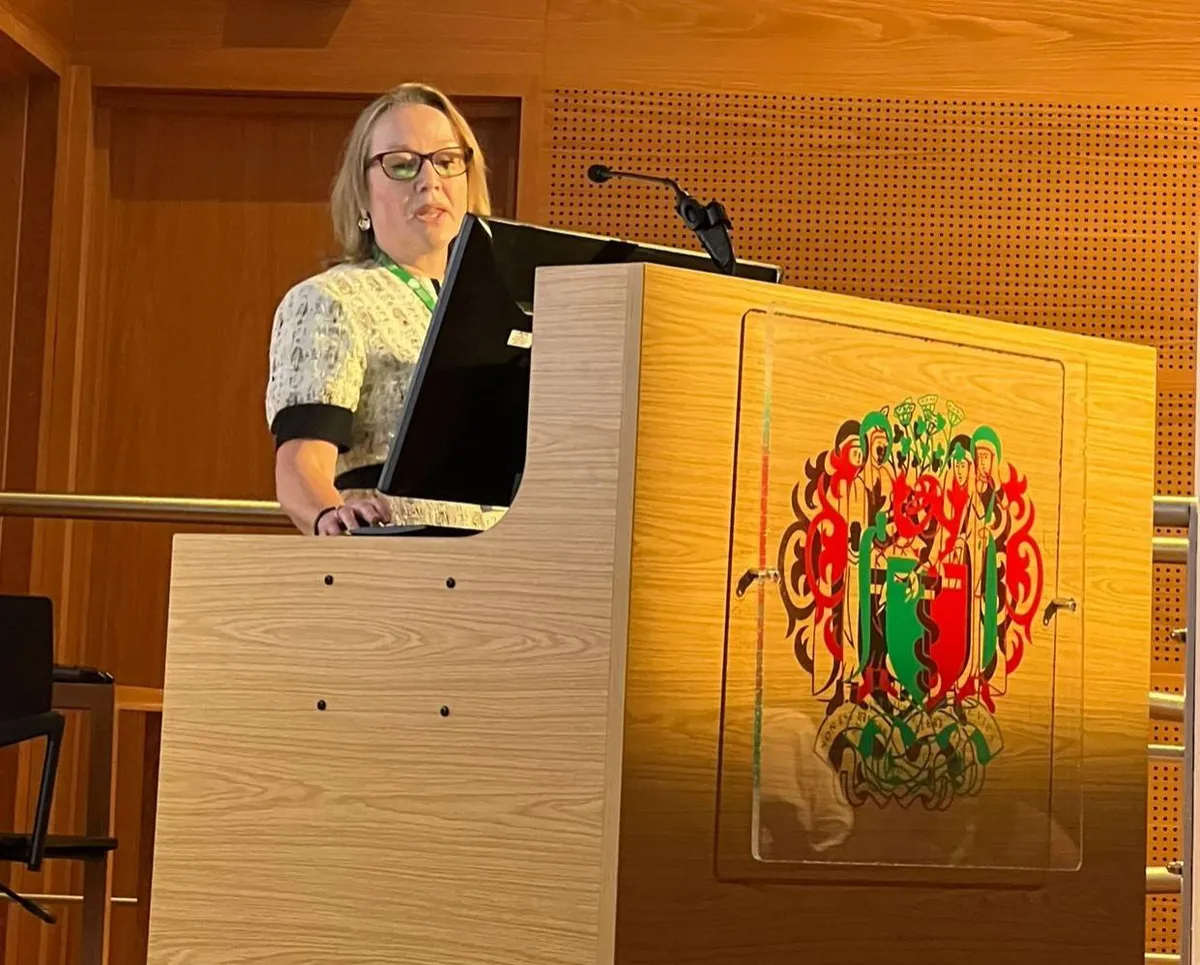
I have spent more than 16 years supporting women and couples around health and fertility.
My work has been featured by the BBC and I have spoken at London's Royal Society of Medicine.
I am also a trained counsellor and a qualified phlebotomist.
Those backgrounds matter to how I work.
Counselling taught me not to treat the emotional cost of fertility as an inconvenient side issue.
Working with blood testing taught me respect for what medical information can tell us — and for the limits of what one result can tell us on its own.
But I am very clear about scope.
I am not your fertility doctor.
My role is fertility education, structured interpretation, preparation and support.
Your medical team remains responsible for your diagnosis and treatment.
The Difference Is Not That I Know a Secret Nobody Else Knows
There isn't one secret fertility answer.
The difference is the way we handle the information.
Instead of:
“This might matter, so let's do it.”
I want:
“Why do we think this matters to you?”
Instead of:
“This supplement improves egg quality.”
I want:
“What evidence do we actually have, and what outcome was measured?”
Instead of:
“Your IVF failed because of inflammation.”
I want:
“What happened during the cycle, and what can we legitimately infer from that?”
Instead of:
“Everything is normal.”
I want:
“Which questions have those tests actually answered?”
That is how Fertility Bandwidth works.
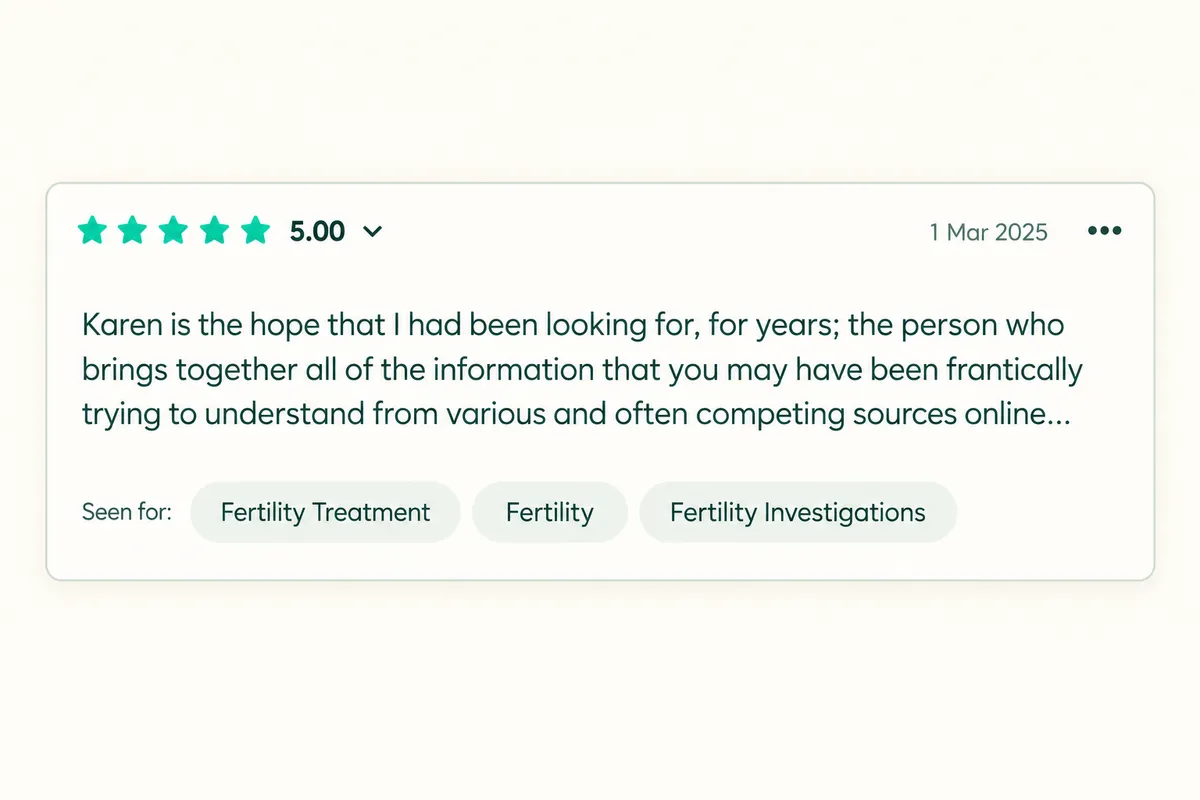
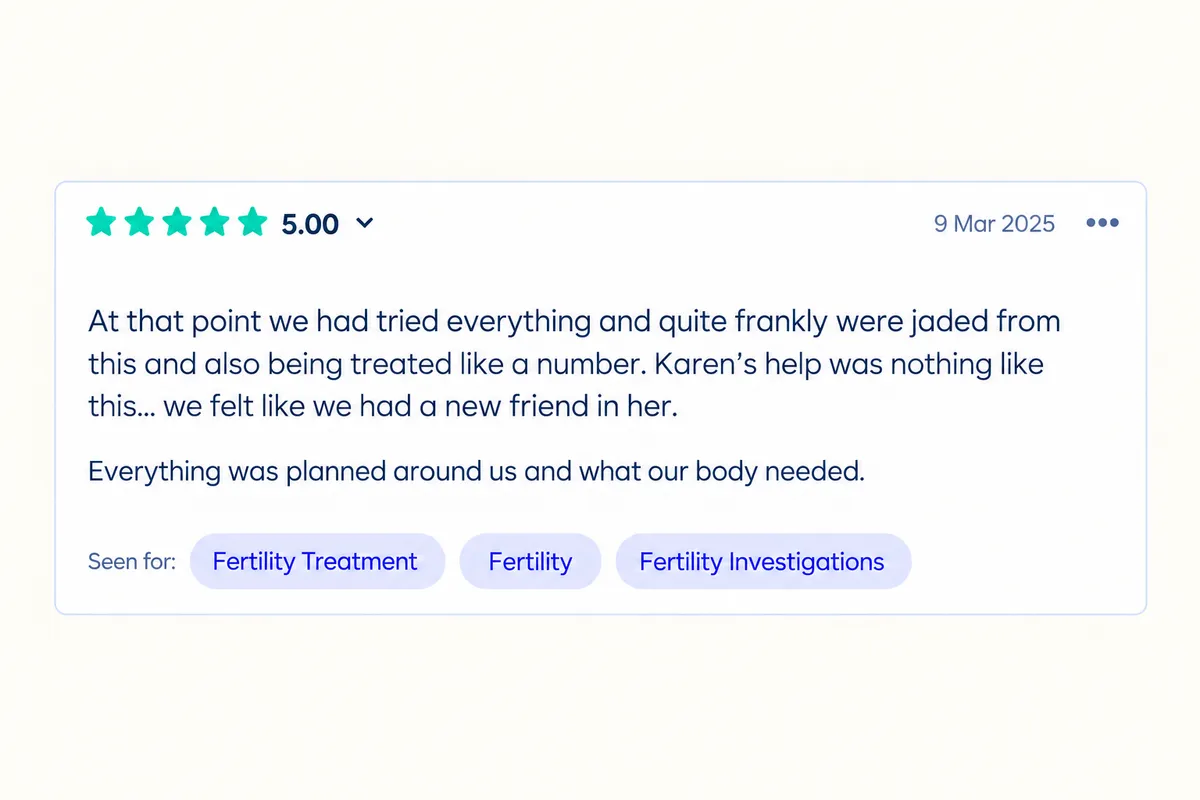
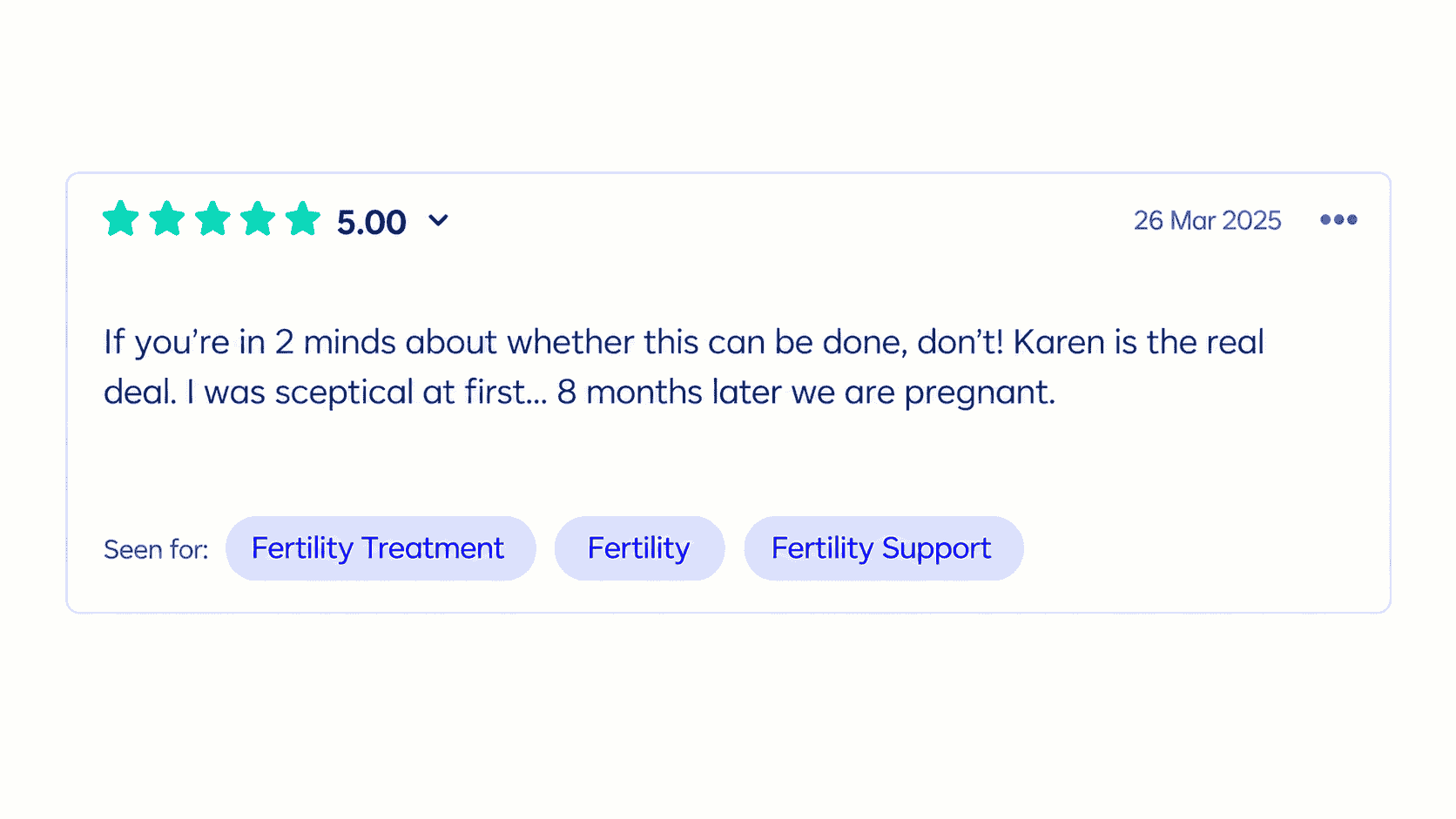
What It Feels Like When Someone Finally Helps You Make Sense of It
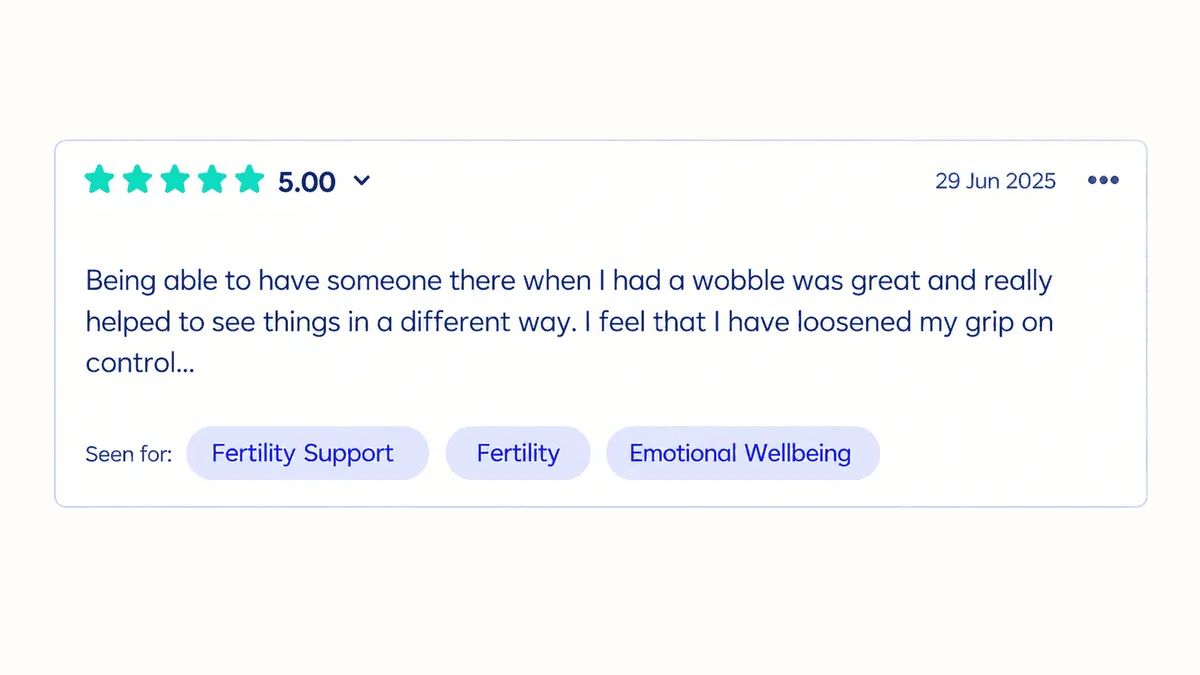
5.0/5 from 9 verified Doctify reviews
If IVF Is Your Next Step, Start There
If you're preparing for IVF now, you do not need another consultation simply to begin making sense of it.
IVF Prep by Fertility Bandwidth™ is the self-guided starting point.
It covers the questions that come up before and through treatment, including:
nutrition,
supplements,
movement,
sleep and recovery,
male-factor preparation,
treatment-stage questions,
and the emotional load of IVF.
You don't have to complete everything.
Use the training that fits where you are now.
Come back when the stage changes.
And take the medical questions back to your clinic when that is where they belong.
IVF Prep by Fertility Bandwidth™
£47 once · Instant access · Lifetime access
Already in Stimulation or Approaching Egg Collection?
The Point Is Not to Become Better at Fertility
You have a life outside this.
And fertility treatment has a habit of trying to consume all of it.
My goal is not to make you better at researching fertility.
It is not to give you more things to track.
And it is certainly not to convince you that you can control an outcome biology does not allow anybody to guarantee.
It is to help you reach the point where you can say:
I understand what we know.
I know what questions still deserve asking.
I know what belongs with my clinic.
I know what I can reasonably do.
And I am no longer treating every new fertility recommendation as an emergency.
That is Fertility Bandwidth™.
Karen Botha
Founder, Fertility Bandwidth™
Online fertility education and IVF preparation support for women and couples across the UK.
Grounded in expertise and personal care, Fertility Bandwidth helps you make sense of fertility decisions with greater clarity and confidence.
© Karen Botha / Fertility Bandwidth™ · Privacy Policy · Terms · Disclaimer