
Ovulating but Not Getting Pregnant — Why Ovulation Isn’t the Signal You Think It Is
If you’re ovulating but not getting pregnant, the confusion cuts deeper than frustration. Ovulation is supposed to mean things are working. It’s supposed to be proof that your body is capable. Yet month after month, nothing happens — and eventually the problem stops feeling biological and starts feeling personal.
This article exists to dismantle one damaging belief: that ovulation equals fertility. It doesn’t. Ovulation is a minimum requirement, not a success signal. And once ovulation hasn’t led to pregnancy, the issue is no longer timing, effort, or mindset. It’s unseen resource depletion — something most women are never taught to look for, and cannot resolve alone without structured diagnostic support.
What Ovulation Actually Proves (and What It Doesn’t)
Ovulation proves one thing only: your body can release an egg.
It does not prove that your body has the internal resources required to fertilise, implant, and sustain early pregnancy. These are entirely different biological demands, governed by different systems, priorities, and survival logic.
The fertility bandwidth model explains this distinction clearly. Your body is always allocating resources according to perceived safety and survival. When underlying health imbalances are present — even subtle ones — your body diverts energy, nutrients, hormones, and repair capacity toward keeping you functioning. Reproduction is never prioritised over survival. Growing a baby is always last in line.
So yes, ovulation can continue even when fertility bandwidth is too low for pregnancy.
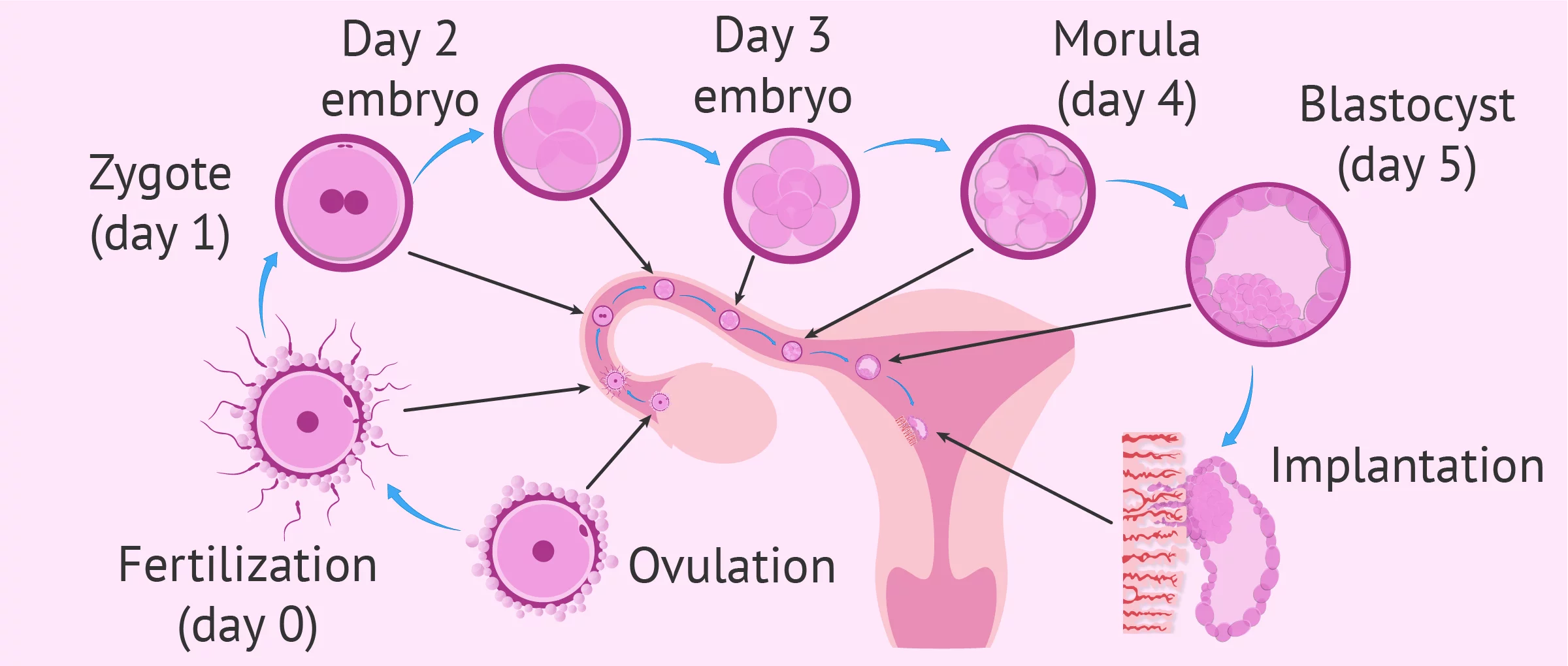
This is why ovulation without pregnancy is not a mystery. It’s a misinterpreted signal.
Ovulation vs Pregnancy: The Comparison No One Makes
Ovulation and pregnancy are often spoken about as if they are part of the same process. They are not.
Ovulation is an event. Pregnancy is a state your body must be able to sustain.
Ovulation requires a brief hormonal trigger. Pregnancy requires months of uninterrupted internal stability, immune tolerance, blood sugar regulation, thyroid support, gut integrity, stress resilience, nutrient sufficiency, and inflammatory control — all at once.
The fertility bandwidth framework makes one thing explicit:
If your body is busy compensating for underlying imbalances, it will still ovulate — but it will quietly shut down implantation and early pregnancy to protect the host.
This is why women with regular cycles, confirmed ovulation, and “normal” tests can still not conceive.
Nothing is wrong with the egg release. Everything is happening after it.
Why “Trying Harder” Stops Working
This is where identity disruption happens.
Most women respond to not getting pregnant by doing more. More tracking. More supplements. More optimisation. More effort. But fertility does not respond to pressure. It responds to capacity.
The fertility bandwidth model explains why information hasn’t worked. You can’t supplement your way out of a system-wide resource deficit. You can’t mindset your way past a body that is already stretched thin. And you cannot self-identify the hidden resource drains pulling bandwidth away from reproduction.
This is where self-help stops.
If ovulation hasn’t led to pregnancy, the issue is no longer something you can Google your way through. The problem is diagnostic, not educational.
The Real Question You Haven’t Been Asked Yet
The question is not “Why am I ovulating but not getting pregnant?”
The real question is:
What is your body spending its resources on instead?
This is the core of the fertility bandwidth approach. Symptoms don’t need to be dramatic to matter. Subclinical inflammation, unresolved gut issues, blood sugar instability, chronic stress patterns, immune activation, nutrient depletion, or hormonal compensation can all quietly drain fertility bandwidth without stopping ovulation.
Until those resource pulls are identified, pregnancy remains biologically unsafe — no matter how well-timed intercourse is.
Why This Can’t Be Fixed Without Structure
This is the point most women resist — and the point everything changes.
You cannot feel fertility bandwidth. You cannot track it with an app. And standard fertility testing does not measure it. That’s why so many women are told everything is “fine” while nothing is working.
This is why our work is built around diagnostic clarity first. We don’t “try to improve fertility.” We identify where bandwidth is being drained and restore function at a root-cause level using our Relax, Restore, Revive framework.
This approach is decisive because it has to be. Fertility only switches on when the body perceives enough internal safety to support another life.
Your Next Step (No Fluff)
If you are ovulating but not getting pregnant, you have already done the self-help stage. Repeating it will not change the outcome.
Your next step is not another article. It’s not another supplement. It’s not more tracking.
Your next step is to find out why your body does not currently have the capacity to sustain pregnancy.
That is exactly what our Fertility Reset Programmes are designed to do. They exist to identify the unseen resource drains, rebuild internal function using the fertility bandwidth model, and restore the conditions required for conception — not through effort, but through capacity.
Start with the pillar explanation of the fertility bandwidth framework, then move forward into structured diagnostic support.
Because if ovulation hasn’t led to pregnancy, the issue is no longer timing.
It’s bandwidth.
