
Healthy but Not Fertile? Why Being “Healthy” Still Isn’t Enough to Get Pregnant
You eat well, you exercise, and your test results keep coming back as normal, yet you are still not pregnant. If you have ever been told that you are healthy and just need to keep trying, this article explains why that advice often misses the real issue. Health and fertility are not the same thing, and understanding the difference can completely change your chances of getting pregnant naturally.
This guide is for women who are doing everything “right” but feel stuck, confused, and increasingly frustrated. By the end, you will understand why your body may not yet feel ready for pregnancy and what needs to shift for fertility to return.
What Does “Healthy but Not Fertile” Actually Mean?
Being healthy means your body is functioning well enough to survive. Being fertile means your body feels safe, supported, and resourced enough to reproduce. Many women fall into the gap between these two states. They are not unwell, but their reproductive system is quietly downregulated.
It is possible to have normal blood work, regular cycles, and a healthy lifestyle while still lacking the internal signals required for ovulation, implantation, and hormonal stability. Fertility is not a basic function; it is a luxury function that only turns on when the body senses abundance rather than pressure.
Why Being Healthy Doesn’t Guarantee Pregnancy
Modern ideas of health often unintentionally work against fertility. High levels of exercise, long-term calorie control, constant productivity, and chronic low-level stress all communicate the same message to the brain: now is not a safe time to reproduce. This can happen even when stress does not feel extreme or overwhelming.
The reproductive system is governed by the brain, particularly the hypothalamus, which decides whether ovulation should occur. When the body perceives physical, emotional, or energetic strain, it may suppress ovulation or weaken the hormonal signals needed to support pregnancy. This suppression is often subtle and does not always show up clearly on standard fertility tests.
Fertility vs Health: The Difference No One Explains
General health focuses on the absence of disease and whether values fall within normal ranges. Fertility, however, depends on optimisation rather than adequacy. A cycle can be regular without being ovulatory. Hormones can be within range without being well timed or well supported. Weight can be stable while energy availability remains too low for reproduction.
This is why so many women are told everything looks fine while conception still does not happen. Medical testing is designed to detect pathology, not to assess whether the body is actively prioritising fertility.
How to Support Fertility When You Are Already Healthy
One of the biggest shifts required is letting go of the idea that fertility improves with more effort. Many healthy women unknowingly push their bodies harder when trying to conceive by exercising more, controlling food more tightly, or constantly researching solutions. Unfortunately, this often reinforces the very signals that suppress fertility.
Restoring fertility usually begins with restoring energy availability. This means eating enough to support hormonal production, spacing meals regularly to stabilise blood sugar, and allowing the body adequate recovery time. Ovulation is energetically expensive, and when the body senses scarcity, it will prioritise survival over reproduction.
Equally important is calming the nervous system. Chronic stress does not have to feel dramatic to affect fertility. Long-term uncertainty, emotional pressure to conceive, poor sleep, and internalised expectations all contribute to a stress response that interferes with reproductive hormones. When the nervous system shifts into a state of safety, ovulation and hormone balance often improve naturally.
Best Practices for Getting Pregnant Naturally When You Are Healthy
Supporting fertility requires a different mindset from general wellness or fitness. Rather than aiming for discipline and optimisation, fertility responds best to consistency, nourishment, and nervous system regulation. This includes eating for hormonal health rather than body composition, balancing movement with rest, and paying attention to the quality of ovulation rather than simply counting cycle days.
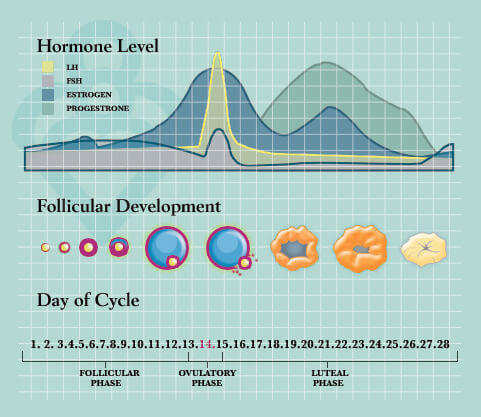
Many women also benefit from focusing on the luteal phase, which plays a crucial role in implantation and early pregnancy. Even when ovulation occurs, inadequate support during this phase can prevent conception from progressing.
Common Mistakes Healthy Women Make When Trying to Conceive
One of the most common mistakes is assuming that normal test results mean fertility should happen automatically. Another is overlooking subtle cycle symptoms that indicate weak ovulation or hormonal imbalance. Over-supplementing without understanding root causes is also common, as is waiting passively for time to solve a problem that is functional rather than age-related.
Perhaps the biggest mistake is believing that fertility decline is inevitable or irreversible. In many cases, fertility has not disappeared; it has simply been downregulated in response to long-term stress or under-support.
Real-World Example: Healthy, Normal Tests, Still Not Pregnant
Many women arrive with a similar story. Their cycles are regular, hormones are normal, and lifestyle habits are considered healthy. After shifting away from high-intensity exercise, increasing food intake, prioritising recovery, and addressing nervous system stress, ovulation becomes stronger and more consistent. Pregnancy often follows without medical intervention.
These outcomes are not about luck. They are about aligning the body with the conditions fertility requires.
Tools and Support for Restoring Natural Fertility
Cycle awareness, sleep optimisation, stress regulation practices, and nutrition frameworks designed specifically for ovulation can all make a meaningful difference. When these elements are combined into a structured approach, the body often responds more quickly and predictably.
This is exactly what the Fertility Reset Programmes are designed to support, bringing together education, physiology, and nervous system regulation in one place.
FAQ: Healthy but Not Fertile
Many women ask why they are not getting pregnant if they are healthy. The answer is usually that fertility depends on safety signals rather than health markers alone. Stress can suppress ovulation even when it does not feel overwhelming, and unexplained infertility is often unexplored rather than truly unexplained. In many cases, fertility can return naturally once the underlying signals are addressed.
Conclusion: Health Is Not the Same as Fertility
You are not broken, and your body is not failing you. It is responding intelligently to the signals it receives. When you move away from performance-based health and toward fertility support, the body often regains its natural reproductive rhythm.
If you are ready to shift those signals and support your body in a way that aligns with conception, the Fertility Reset Programmes are the next step.
If this feels familiar, read next: Unexplained Infertility — Why Everything Looks Normal But You’re Still Not Pregnant.
